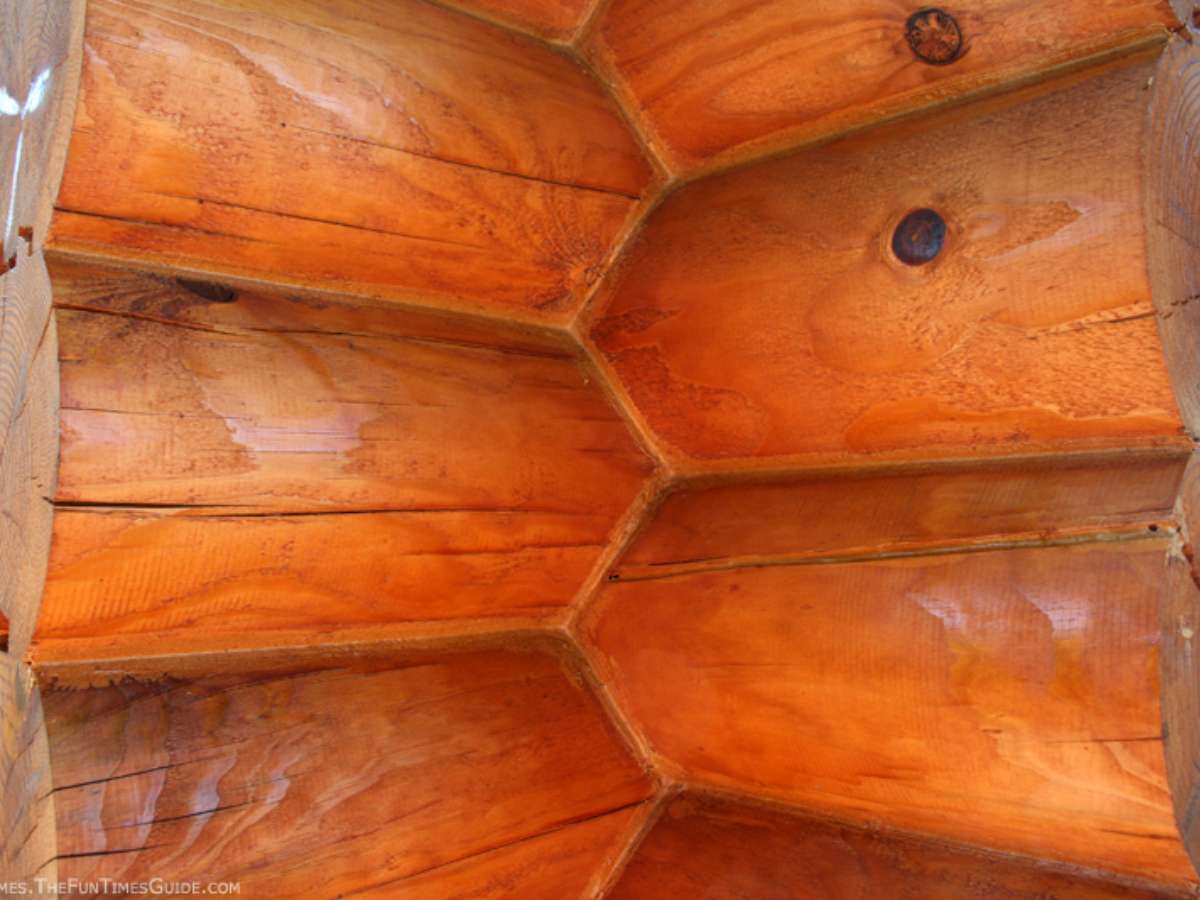
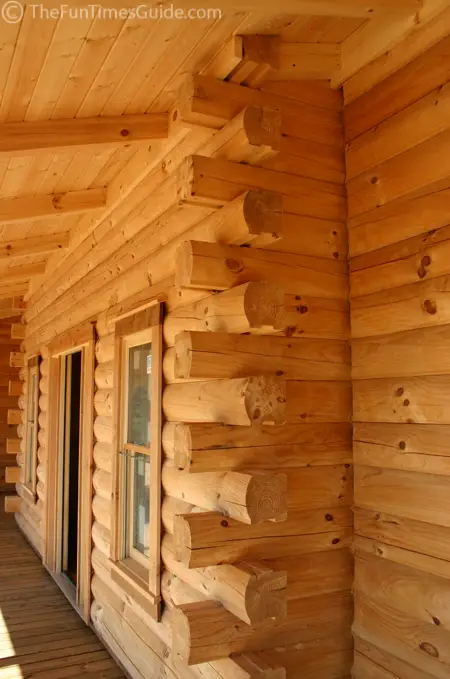
 When we first started designing our log home with Honest Abe Log Homes (about a year ago), Jim and I both gravitated toward the D-Log for some reason.
So naturally, we’ve been thinking all along that our log home would be built with D-Logs, right?
Well, fast-forward one year, and now we’re considering a switch to Genesis Logs!
See why below… plus a listing of some of the differences between Genesis Logs and D-Logs.
What We Know About D-Logs:
- D-logs are 8″x8″ logs — round on the exterior side and flat on the interior side
- Round logs on the exterior give the home a “traditional” log home look from the outside
- Flat interior logs are easier to keep clean (round logs tend to gather more dust and are harder to dust, period)
- A smooth interior surface is easier to modify later with paint, drywall, etc., should you ever want to change the “look” inside
- It’s easier to hang things (pictures, decorations) on flat interior surfaces
- Are Genesis Logs really as energy-efficient as D-Logs? I mean, Genesis Logs are only 6″ deep in all areas, whereas D-Logs are 8″ deep at their widest point in the center. Don’t those 2 inches count for something in terms of energy-efficiency and R-factors?
- What is the difference in using Genesis Logs with chinking vs without? We’re not all that fond of the look of chinking… and it would take away from the “cottage” look that we’d be going for if we chose the Genesis Logs.
- Any chance that the wider Genesis Logs are just a fad? Or a trend that log home owners are only recently starting to popularize? I’m not sure I would want to go with a log system that’s not well-researched yet.
- And something else I’ll have to ask the folks at Honest Abe directly… It clearly says that D-Logs are “milled”… but aren’t Genesis Logs milled, too? I thought we wanted “milled logs” for a number of reasons. Or, maybe I’m confusing “milled” with “kiln-dried”…
Those were more than enough reasons for us to be content with D-Logs. Plus, most of the log homes we’ve visited over the past year have used D Logs.
But recently, we’ve gone inside a handful of homes built with what Honest Abe calls their Genesis Logs which are 6″x12″ and flat on both sides. We’re also starting to see more of them in the log home magazines, too. And we happen to like the look!
So, here it is almost a year later since we started designing our log home and we still haven’t broken ground yet (because we haven’t been able to find a G.C. willing to build our log home for less than $150/SF)…
But this means that we are in a position that we can still make some changes at this point. And one of those changes just might be switching from D-Log to Genesis Log.
Before we do, I would hope to hear from others who’ve been there, done that.
So…
If you’ve used (or researched using) 6″x12″ flat logs — and NO chinking — please do share your experiences. I, and others in the same position, would be most appreciative if you would post a sentence or two in the Comments below. Thanks so much in advance!
My Thoughts On Genesis Logs At This Point:
We really like the look of flat logs — inside and out. Especially since we are thinking about going with a painted looking exterior, similar to this:
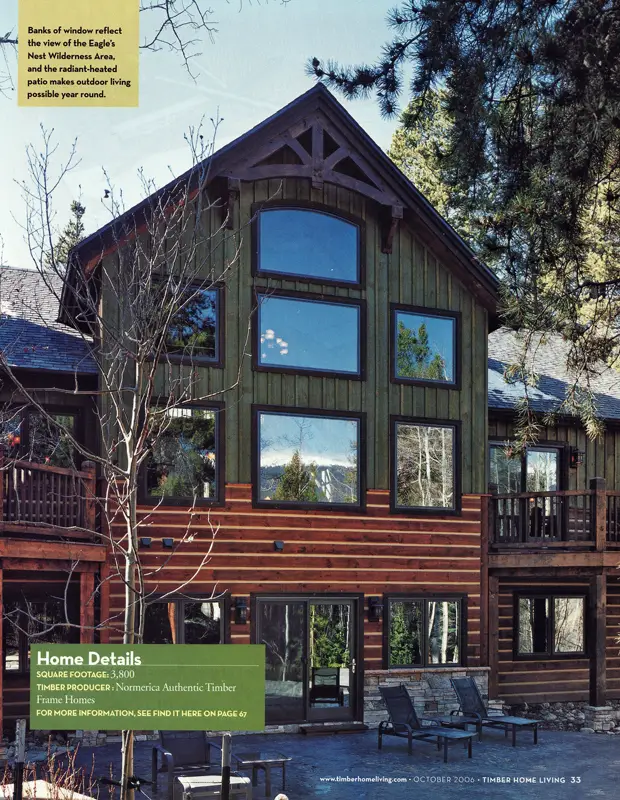
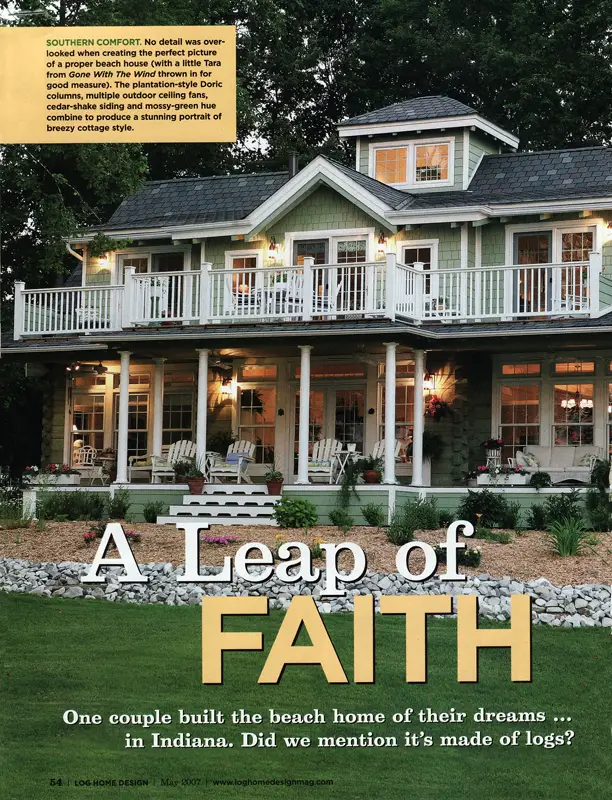
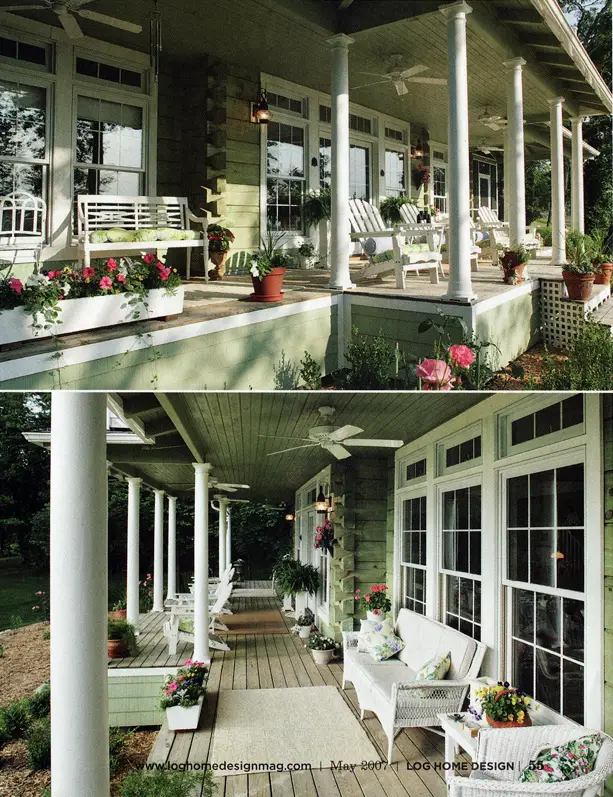

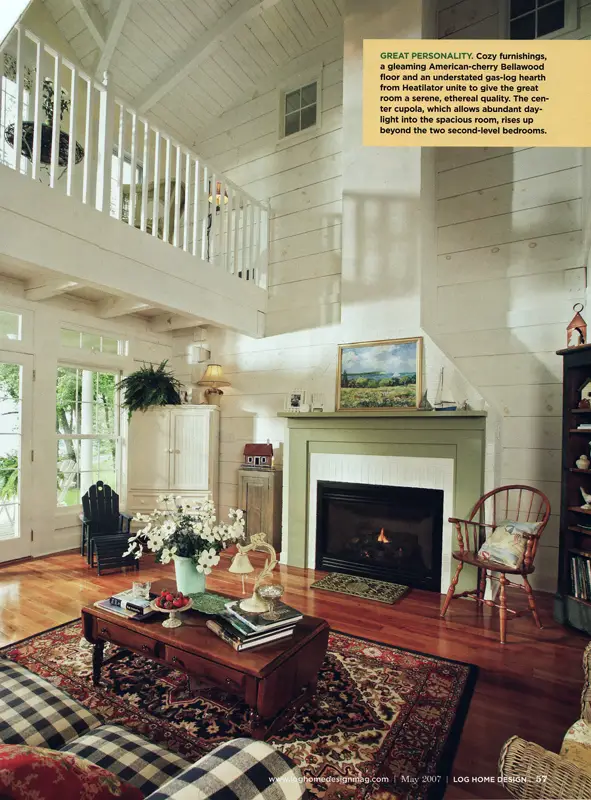
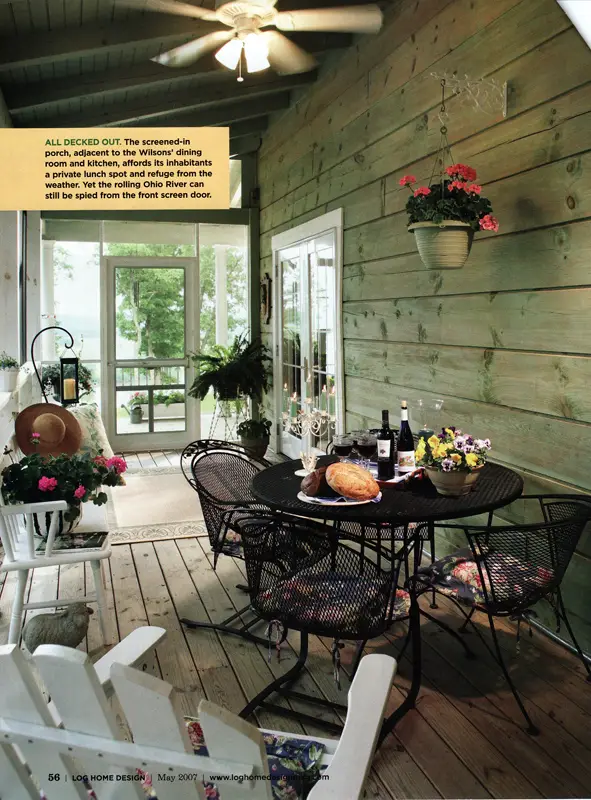
There’s just something “fresh” and “modern” about a sage green colored exterior that appeals to us right now. And we’re really liking the non-traditional “cottage” look that you get when you choose a colored stain and Genesis Logs. Besides, even if we just went with a “traditional” log home stain now (brown)… we could still go with the “painted” look later, right?
Some Of My Biggest Concerns About Genesis Logs:
Obviously, we are going to have a heart-to-heart with our sales rep from Honest Abe about this before we make the switch from D-Logs to Genesis Logs — if we decide to go that route. But I’m hoping to get some feedback from others who might have some experience with this type of log first.
Thanks in advance for any input you can provide…
Log Homes Made With Genesis Logs
 The “Highlander” with Genesis Logs from Honest Abe Log Homes
 The “Westfield” with Genesis Logs from Honest Abe Log Homes
 Honest Abe’s Genesis Log Home Gallery
According to Honest Abe Log Homes:
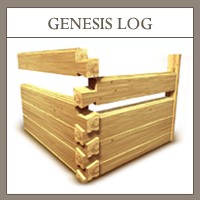 “The Genesis log is a big 6″x12″ log that gives you that Appalachian feel but with no interior chinking. The exterior surface of the log is rough textured and has a groove at one edge that can be finished with chinking, or without it as desired. The interior surface is smooth and enhances the massive feeling so characteristic in this log style. Dovetail corners complement the look and ensure a tight fit. The logs are locked together with a large single tongue and groove, and a foam gasket and wood-binding sealer are applied between each course before fastening with large lag screws.”
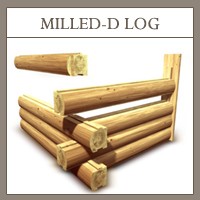 “Our 8″x8″ Milled-D log is planed smooth on all sides for a beautiful appearance. This log system also features an inserted corner notch and a milled drip edge. These time-tested methods of joinery ensure an air-tight seal that keeps the outside elements outside. The logs are locked together with a large single tongue and groove, and a foam gasket and wood-binding sealer are applied between each course before fastening with lag screws.”